
Skip to content
  • Free written quotes
  • Local crews
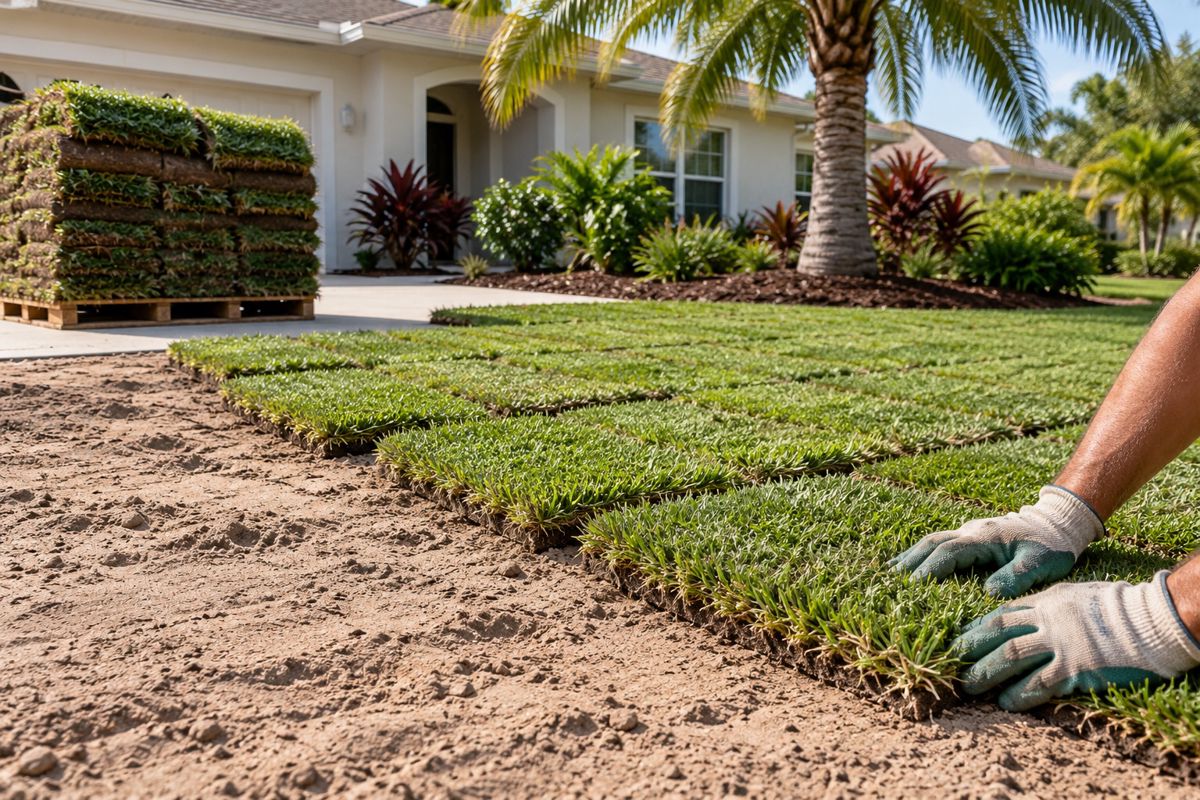
Fresh St. Augustine sod being laid in rows on graded soil

Sod installation in Fort Lauderdale

Sod installation in Fort Lauderdale, from removal to the first mow

Old turf removed, ground graded and fresh sod laid, with watering advice for South Florida heat.

  • Grass type matched to sun, salt and soil
  • Grading so water drains instead of pooling
  • A clear watering plan that fits local restrictions

Step 1 of 3

What do you need?

What does sod installation in Fort Lauderdale involve?

Sod installation replaces a failing or weedy lawn with rolls of living grass that look like a lawn within days. The steps are simple, but the order matters.

  1. Strip the old turf and weeds, or kill and remove them.
  2. Check the soil and fix low spots, adding soil where the surface is uneven or thin.
  3. Grade so water moves away from the house and slab.
  4. Check irrigation coverage and repair broken heads before sod goes over them.
  5. Lay sod in staggered rows, tight at the seams and trimmed at beds and walks.
  6. Roll or tamp for good soil contact and water right away.

Sod is perishable. It works best when it is laid within a day of being cut, so the ground should be ready before the pallets arrive.

Which grass is right for a Fort Lauderdale lawn?

St. Augustine

The most common lawn grass in South Florida. It handles heat, humidity and moderate salt. Full-sun lawns often get Floratam, while semi-dwarf types such as Seville, Palmetto and Raleigh are chosen for finer texture or some shade. Raleigh is often cited for better salt tolerance.

Zoysia

Denser and finer-bladed, with a more manicured look and some shade tolerance. It takes longer to fill in and usually costs more.

Bahia

A low-input grass that tolerates poor sandy soil and drought. It is coarser, and it sends up seed heads.

Seashore paspalum

Very salt tolerant, so it is used on some coastal lots. It needs more mowing and feeding than other grasses.

Why do lawns die here, and can new sod fix it?

New sod only helps if the cause of the old lawn's failure is dealt with. Common causes in Broward County include:

  • Chinch bugs, which can kill patches of St. Augustine quickly in hot, dry spells
  • Fungal diseases such as gray leaf spot and take-all root rot
  • Shade from trees that have grown since the lawn went in
  • Salt spray or tidal flooding on waterfront lots
  • Compacted or uneven soil that sheds water
  • Sprinklers that miss areas or overwater others

Get the cause identified first. The UF/IFAS Extension office in Broward County can help with pest and disease identification. If irrigation is part of the problem, look at our sprinkler and irrigation page before laying anything new.

Price comes down to the area, grass type, how much old turf must be removed and hauled, how much grading or soil is needed, whether sprinklers need repair and how easily pallets can reach the yard. Slopes, tight gates and long carries add labor.

For a typical yard, prep and installation fit into a day or two, with larger or more complex lawns taking longer.

Sod can go down most of the year in South Florida. Rainy-season rain helps rooting, but heavy storms can wash soil from edges and slow work. Local watering rules often allow extra watering for a short period while new sod establishes, but confirm the current rules for your city.

What does care look like after the sod goes down?

The first weeks decide whether the lawn takes. Keep the sod damp so it does not dry at the edges, and stay off it as much as you can. After two weeks or so, gently tug a corner. If it resists, roots have started to grip the soil.

Wait until the grass is rooted before the first mow, and mow St. Augustine fairly high, around 3.5 to 4 inches, with a sharp blade. Fertilizer is restricted in many Broward cities and in the county during the summer rainy season, so check the current dates before you feed. Do not guess.

Planning a paver area or new beds nearby? See hardscaping and pavers or landscape design. You can also start at our home page.

Free written quotes Local crews Reliable scheduling Tidy job sites

Questions about landscaping in Fort Lauderdale

How soon can we walk on new sod?

Light foot traffic for watering or checking is fine, but keep kids, pets and mowers off for the first couple of weeks. Roots need time to grip the soil, and heavy traffic leaves ruts and lifted seams. Wait until the grass resists a gentle tug before normal use.

Should the old lawn be removed or can sod go over it?

Remove it. Sod laid over old grass and weeds struggles to root, raises the lawn above walks and beds, and brings the old problems with it. Stripping the old turf also lets you fix grade and soil. Removal is a normal part of lawn replacement.

How much sod should be ordered?

The area is measured first, and a modest extra amount is usually added for cuts around beds and curves. Ordering a bit over is cheaper than running short and having a second delivery with different cut dates. Leftover pieces can patch spots later.

Can sod be laid during hurricane season?

Yes, but watch the forecast. Heavy rain and wind can wash out edges and move loose pieces before roots take hold. If a storm is expected within a few days, it is usually wiser to postpone. The rain itself helps with watering once the system passes.

Will sod survive salt spray or tidal flooding?

It depends on the grass and the exposure. Seashore paspalum tolerates salt best, and some St. Augustine types handle moderate salt. Repeated flooding with salt water can kill most lawns. Tell us how close you are to the water and whether the yard floods so the choice fits.

Do I still need to water during the rainy season?

Not every day. New sod needs steady moisture, but afternoon storms often supply it. Check the soil, and let the rain sensor on your system skip cycles when it has rained. Overwatering feeds fungus and wastes water, and local rules limit watering days and hours.

Request sod installation

Tell us what you need and we call you back.

No obligation.

Step 1 of 3

What do you need?

Ready when you are. Call now or request a quote online.

How it works

  1. Tell us about the yard

    Size, goals and any photos.

  2. Site visit and quote

    We walk the property and put the price in writing.

  3. We do the work

    Scheduled crew, cleanup included.