
Skip to content
  • Free written quotes
  • Local crews
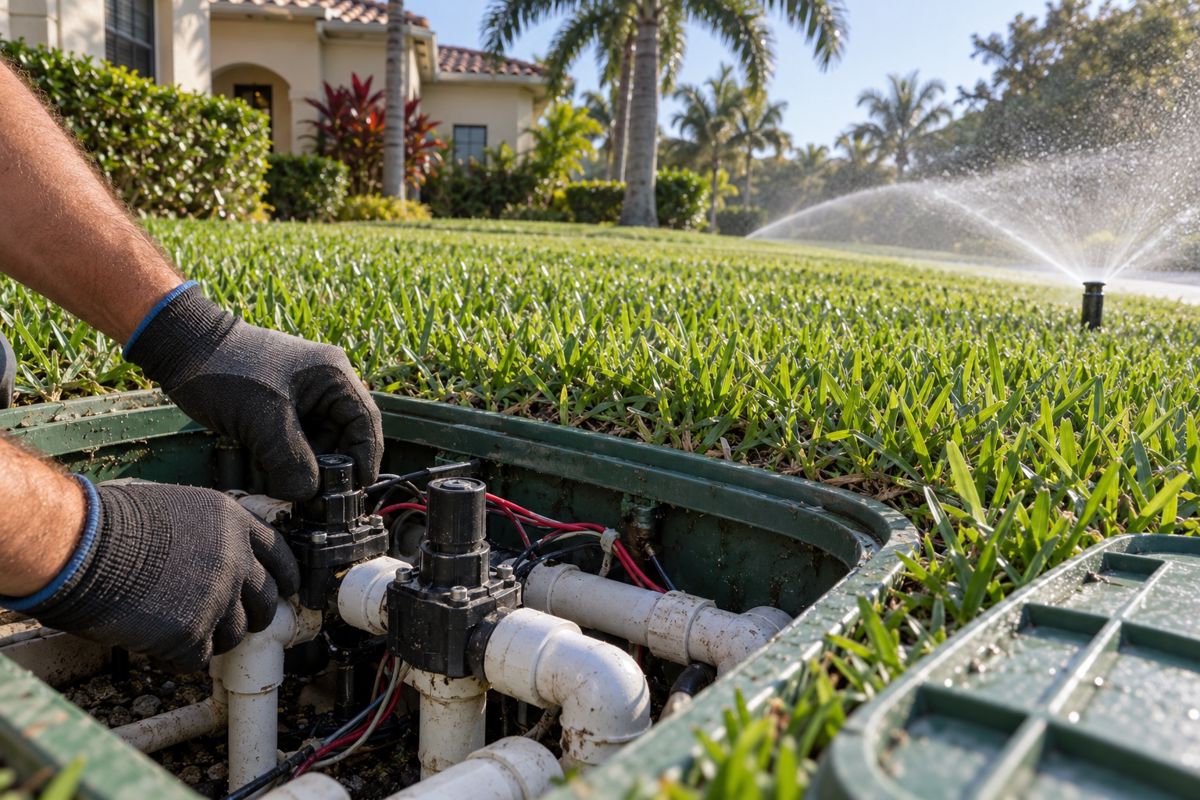
Open irrigation valve box with a rotor sprinkler spraying the lawn behind

Irrigation in Fort Lauderdale

Sprinkler system installation in Fort Lauderdale that follows the rules

Zoned irrigation sized for sandy soil, local watering days and sensors that skip a cycle when it rains.

  • Zones split by sun, plant type and spray pattern
  • Rain sensor and controller settings explained
  • Options for city water, wells and drip lines

Step 1 of 3

What do you need?

What does sprinkler system installation in Fort Lauderdale involve?

A new system begins with a walk of the yard. The crew measures the lawn and beds, finds the water source, notes sun and shade, and decides how many zones are needed. Then comes the layout, the trenching or pipe pulling, the valve box, the controller, the heads and a full test.

Head types are matched to the job:

  • Rotors for large, open lawn areas
  • Spray heads for small or narrow lawn strips
  • Drip and micro-spray for shrubs, hedges and flower beds
  • Bubblers for individual trees and palms

Sandy soil makes trenching fairly easy. The harder parts are working around roots, pavers, driveways and existing buried lines, and keeping water off stucco walls.

What are the watering rules in Broward County?

Irrigation in Fort Lauderdale is governed by South Florida Water Management District rules, Broward County and in some cases the city. In general, lawn and landscape watering is limited to a set number of days a week, based on your address, and is not allowed during the middle of the day. Rules have been tightened during dry spells before and can change.

Florida law also requires a working rain sensor on automatic irrigation systems, so a system that waters in the rain is out of compliance. New plantings and sod usually get a short establishment period with extra watering allowed.

We do not want to give you the wrong schedule, so check your city and the water management district for current days and hours at your address. A well-programmed controller makes following them easy.

How should zones be set up for sandy soil?

Sand holds little water between cycles, so how you water matters as much as how much. Short, repeated runs within the allowed times often soak in better than one long run, especially where the soil is compacted or where water runs off hard.

Good zoning keeps these apart:

  • Full sun and shade, which dry out at different rates
  • Lawn and planting beds, which need different heads and run times
  • Rotor heads and spray heads, which put out water at different rates

Drip lines for beds use less water and avoid soaking leaves and walls. A smart controller that adjusts for weather can cut waste, and a rain sensor skips cycles when it has rained. Good irrigation also protects new sod and fresh plantings from drying out in a hot week.

Yes. Many Broward homes irrigate from a shallow well, which keeps the city water bill down. Well water often carries iron, and when heads spray stucco, pavers, driveways or fences it leaves orange rust stains. Aiming heads away from hard surfaces and, in some cases, adding a rust treatment helps. If your pavers are already stained, see our hardscaping page for materials that clean up more easily.

City water systems need a backflow preventer, which protects the drinking supply, and it may need periodic testing. Reclaimed water is available in some parts of the county and is handled under separate rules. Well pumps must be sized for the number of zones so pressure holds. Registration or permit rules for wells vary, so confirm what applies.

What changes the price, how long does it take, and when should you call?

The main price factors are the area to be covered, the number of zones, the head types, the distance from the water source to the zones, the controller, and trenching under driveways or pavers. Repairing an old system costs differently from building a new one, and access to the back yard and existing landscaping matter.

A typical home system can go in over a day or a few days. Timing with other work matters: sleeves should go under pavers or driveways before they are laid, and irrigation should be tested before new sod goes on top.

Call when you have brown spots next to green ones, heads that miss or overlap, a sudden jump in your water bill, damage after mowing, or before starting landscape design work. The home page lists our other services.

What you can expect

  1. Free written quotes

  2. Local crews

  3. Reliable scheduling

  4. Tidy job sites

Questions about landscaping in Fort Lauderdale

Do I need a rain sensor on my sprinkler system?

Florida law requires one on automatic irrigation systems, and it is a good idea anyway. The sensor shuts off the system after rain so you do not water a soaked yard. It must be working, so check it a few times a year and replace it if it fails.

Can a system be added to a yard that is already landscaped?

Yes. The crew trenches carefully or pulls pipe under lawn, works around beds and trees and patches the lawn after. It is cleaner if done before new sod or pavers, but existing yards are common. Expect some visible disturbance along pipe routes.

Why do I still have brown spots with sprinklers running?

Common causes are poor head coverage, clogged or tilted heads, low pressure, compacted soil that sheds water, chinch bugs or fungus, and shade. Do a catch-can test or watch a cycle to see where water lands. If irrigation is fine, have the lawn checked for pests or disease.

Should flower beds and shrubs be on drip?

Often yes. Drip and micro-spray put water at the roots with less loss to wind and evaporation, and they keep foliage and walls drier. They need occasional checks for clogs and breaks. Lawns, by contrast, usually do better with rotors or spray heads.

Can the system run on well water?

Often, yes. Many homes do. The pump needs to match the zones, and a filter helps with sand. Iron staining is the main concern, so heads should not spray walls, pavers or driveways. Wells may have registration or permit rules, so ask your city or county.

How do I find out my watering days?

Look at your city or the South Florida Water Management District website and enter your address or number type. Rules can change in dry seasons, so check again each year. Then set the controller to match, and make sure the clock keeps the right time after a power outage.

Request irrigation systems

Tell us what you need and we call you back.

No obligation.

Step 1 of 3

What do you need?

Ready when you are

Call now or request a quote online.

(954) 555-0123

How it works

  1. Tell us about the yard

    Size, goals and any photos.

  2. Site visit and quote

    We walk the property and put the price in writing.

  3. We do the work

    Scheduled crew, cleanup included.