
Skip to content
  • Free written quotes
  • Local crews
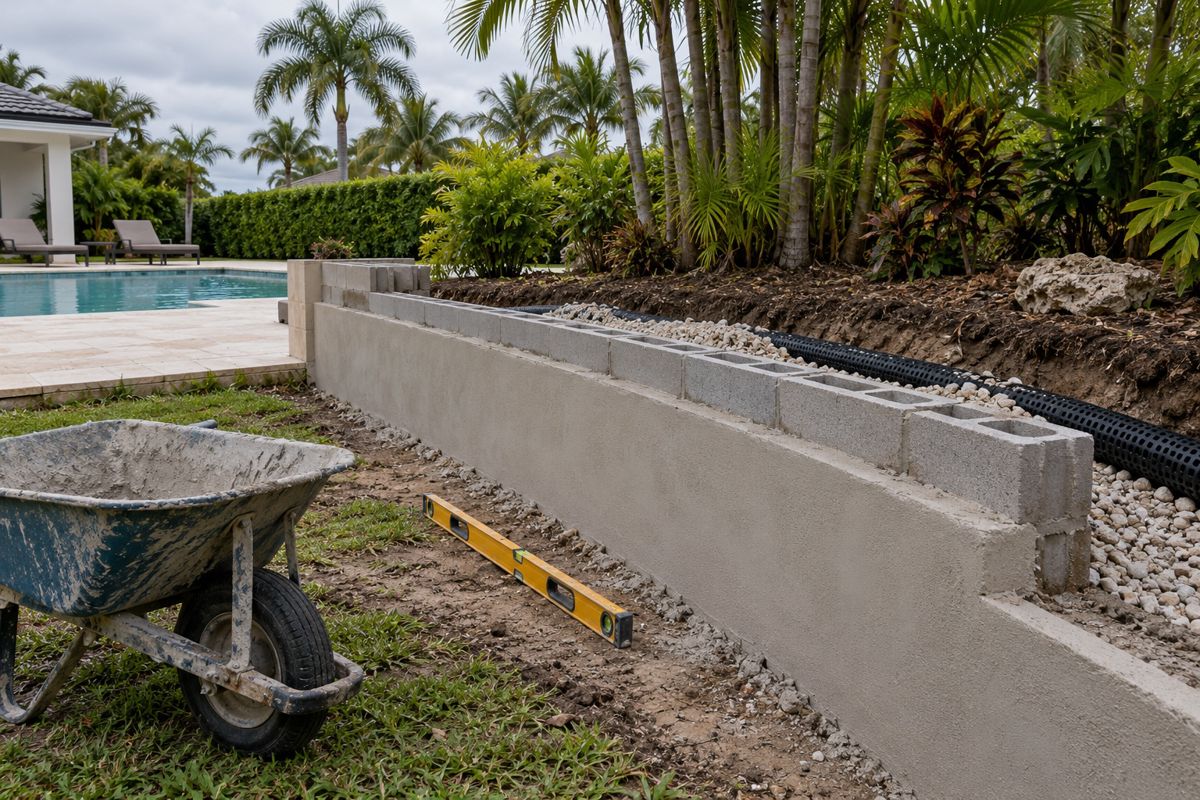
Block retaining wall with gravel backfill and drain pipe in a flat yard

Retaining walls and drainage

Retaining wall contractor in Fort Lauderdale for flat, wet lots

Raised beds, grade changes and drainage fixes for yards where the ground is low, the water table is high and the rain is heavy.

  • Walls sized to the grade change, not guessed
  • Drainage planned with the wall, not after it
  • Notes on permits and engineering where they apply

Step 1 of 3

What do you need?

Why would a flat city like Fort Lauderdale need a retaining wall?

Fort Lauderdale has almost no hills, so retaining walls here are less about slopes and more about changes in level. Homes are often built up above street or canal level, rebuilds may sit higher to meet flood-elevation rules, and neighbors on either side may have filled their lots to different heights.

A retaining wall contractor in Fort Lauderdale typically builds walls for:

  • Raised planting beds and tiered gardens
  • Grade changes between a raised pool deck or patio and the lawn
  • Holding fill along a property line where the neighbor's lot is higher
  • Edging a driveway or entry where soil keeps washing onto it
  • Finishing the yard behind a seawall, which is a separate structure built by marine trades

What is the difference between a retaining wall, a seawall and a planter wall?

A retaining wall holds soil in your yard. A seawall or bulkhead holds back water at the edge of the lot. Seawalls are regulated, need their own permits and are built by marine contractors, so they are outside the scope of this page. A planter wall is a low decorative wall around a bed, and it usually needs less structure.

Common wall materials include:

  • Segmental concrete block. Stacks without mortar and is popular for raised beds and short walls.
  • Poured or block concrete with stucco. Can match the house and suits taller walls with reinforcing.
  • Natural stone. Attractive but heavier and costlier to place.

Wood walls are less common in South Florida because moisture and termites shorten their life.

How do you handle drainage when the water table is high?

A wall is only as good as its drainage. Water pressing on the back of a wall is what pushes it over. Typical wall drainage uses gravel backfill, filter fabric to keep sand out of the gravel, and a perforated pipe at the base that runs to an outlet.

In a flat yard with a high water table, the outlet is the hard part, because there is no slope to carry water away. Options include a swale or storm inlet where the city allows it, an exfiltration trench or dry well that lets water soak into the sand, or a catch basin with a pump in tougher cases. Sending water onto a neighbor's lot or the street is generally not allowed, so the route has to be planned.

Drainage fixes often come before other work. A new lawn does poorly on a soggy yard, so read about sod installation before laying grass over a wet spot.

The main factors are wall length and height, material, footings and reinforcing, how far the crew must carry material, the drain outlet, and whether an old wall has to be demolished. Tying the wall into a patio or planting plan adds work, as do engineered drawings and permits when they are needed.

A short block planter wall can be done in a day or two. A taller or longer wall with footings and drainage can take a week or more, and poured concrete needs curing time. Rain delays are common from late spring through fall.

Walls are rarely a standalone job. They often tie into pavers and patios, so quoting them together can save repeat work.

Do you need a permit or an engineer, and when should you call?

Many cities require a permit for walls above a certain height, often somewhere between two and four feet depending on the jurisdiction, and may require engineered plans for taller ones. Filling or regrading a lot can affect neighbors and flood-zone rules, and some areas limit fill. Property-line walls raise survey and setback questions, and HOAs may need to approve the design. Check with your city building department.

Call when water stands near the foundation for days after rain, when soil is washing onto walks, when a fence or wall leans, or before building a pool or patio on a lot with a grade change. For a bigger plan, see landscape design or start at the home page.

Free written quotes Local crews Reliable scheduling Tidy job sites

Questions about landscaping in Fort Lauderdale

Do I need a permit to build a retaining wall in Fort Lauderdale?

Often yes for taller walls, and sometimes for any wall that holds fill, sits near a property line or affects drainage. The height threshold varies by city. Your city building department can tell you what applies. Ask your HOA too, since many require approval of walls before work begins.

How high can a wall be without an engineer?

There is no single answer. Many jurisdictions treat walls above roughly two to four feet as needing engineered plans, and anything that supports a driveway, pool or structure is held to a stricter standard. Do not rely on a general number. Ask your city what it requires for your lot.

How do I know if my yard needs drainage work?

Look for water standing more than a day or two after normal rain, soggy lawn in one corner, soil washing onto walkways, staining low on walls or damp spots near the slab. Walk the yard after a storm and take photos. Those photos help a site visit enormously.

What wall type holds up best near the coast?

Concrete block and poured concrete with a stucco or paint finish are common because they tolerate moisture and salt air. Natural stone also works. Treated wood tends to rot or attract termites faster here. Any metal parts or reinforcing should be chosen for corrosion resistance near salt water.

Will a wall solve flooding on my lot?

Not by itself. A wall holds soil, but flooding from rain, rising groundwater or king tides is a drainage and elevation problem. Minor ponding can often be fixed with grading, swales or drains. For serious or repeated flooding, a civil engineer should look at the property before you spend on landscaping.

Request retaining walls

Tell us what you need and we call you back.

No obligation.

Step 1 of 3

What do you need?

Ready when you are. Call now or request a quote online.

How it works

  1. Tell us about the yard

    Size, goals and any photos.

  2. Site visit and quote

    We walk the property and put the price in writing.

  3. We do the work

    Scheduled crew, cleanup included.