
Skip to content
  • Free written quotes
  • Local crews
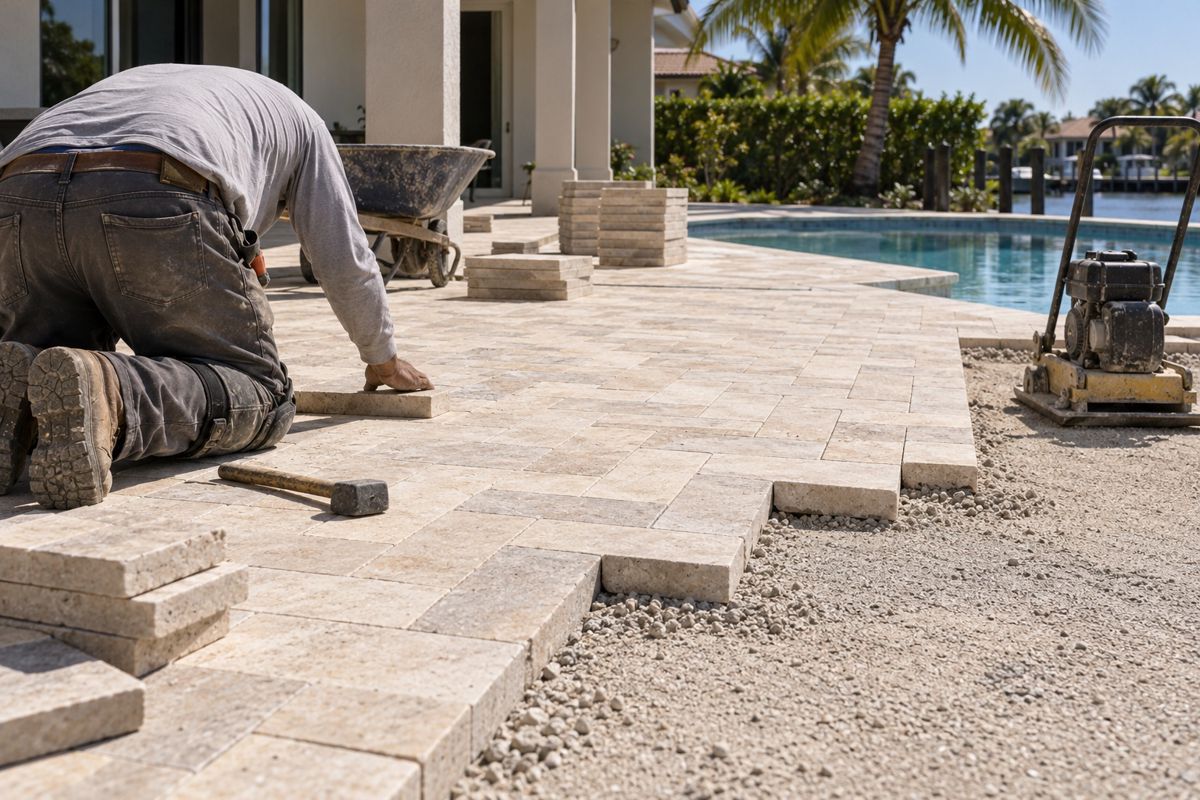
Crew installing herringbone pavers on a compacted base beside a pool

Hardscaping in Fort Lauderdale

Hardscape contractor in Fort Lauderdale for pavers, patios and fire pits

Paver patios, walkways, driveways and fire pits built on a proper base so they stay level through wet seasons.

  • Base and drainage planned before the first paver
  • Materials chosen for heat, salt and pool chemicals
  • Clear scope in writing so you can compare bids

What does a hardscape contractor in Fort Lauderdale build?

Hardscape means the hard surfaces and structures in a yard: pavers, patios, walkways, driveways, pool surrounds, steps, borders, seat walls and fire pits. A hardscape contractor in Fort Lauderdale builds these on ground that is sandy, wet for part of the year and sometimes close to salt water, which changes how the base and the materials are chosen.

Common projects include:

  • Back patios and covered lanai extensions
  • Pool surrounds and decks
  • Front walkways, entry steps and driveway aprons
  • Fire pits and seating areas
  • Garden paths and borders around planting beds

Hard surfaces work best when they are planned with the landscaping around them, so ask how the new area will meet your lawn, beds and drainage.

Why does the base matter so much on sandy, wet ground?

Pavers rarely fail because of the paver. They fail because of what is under it. In South Florida sand, a weak base can settle, wash out in heavy rain or shift under a car.

A sound installation usually runs in this order: dig out the top layer, compact the soil, lay and compact a crushed rock base, spread a thin bedding layer of sand, set the pavers, fit edge restraints and sweep in joint sand. Crushed limerock and other crushed aggregates are both used locally.

Palm and oak roots, buried irrigation lines and a high water table all affect how deep to dig and where water exits. A driveway needs a thicker base than a patio. Ask any contractor what base depth and material they plan to use, and why. A vague answer is a warning sign.

Which paver materials hold up to heat, salt and pool chemicals?

Concrete pavers

The most common choice, with many colors and shapes. They handle vehicles well and cost less than natural stone. Color can fade slowly in strong sun.

Travertine

Popular around pools because it stays cooler underfoot. It is porous, so it usually needs sealing, and salt or pool chemicals can mark unsealed stone over time.

Porcelain pavers

Dense and stain-resistant with low upkeep. They often cost more and need a carefully prepared surface.

Light colors stay more comfortable for bare feet in July than dark ones. If your sprinklers run on well water, iron in the water can leave orange stains on pavers and stucco. Aiming heads away from hard surfaces helps, and our irrigation page explains the water source question.

Price depends on the details, which is why a site visit comes first.

  • Area. Square footage is the starting point.
  • Material. Concrete, travertine and porcelain sit at different price levels.
  • Pattern and shape. Curves, borders and complex patterns mean more cutting and labor.
  • Removal. Taking out old concrete, pavers or sod adds work.
  • Base and drainage. Deeper bases and drain lines add materials and time.
  • Sealing and access. Sealed surfaces and tight access to the back yard change labor.

A small patio can take a few days. A larger patio with a driveway apron can run a week or two. Rain delays are normal from late spring through fall, and tropical weather can pause a job.

What should you check before work starts, and when should you call?

Permit rules for pavers vary by city. Driveway changes, work in the public right-of-way and large increases in hard surface can trigger review, and some HOAs approve color and pattern. Ask the city building department and your association before you sign.

Digging also calls for a Sunshine 811 locate request, which is the standard way to mark buried utilities in Florida. A good crew handles this and tells you the date.

Call when a slab is cracking or settling, when water pools against the house after rain, or before you plan a pool or an outdoor living area. Pavers often go hand in hand with fresh sod around the edges and a new look from landscape design. Our home page lists everything else we can help with.

Free written quotes Local crews Reliable scheduling Tidy job sites

Questions about landscaping in Fort Lauderdale

Do pavers need to be sealed in Fort Lauderdale?

Sealing is optional but common. It can help resist oil, rust and pool chemical stains and keep color richer, and it also helps hold joint sand in place. Sealer needs reapplying every few years, depending on the product and how much sun the surface gets. Travertine is the material most often recommended for sealing.

Can pavers go over my existing concrete?

Sometimes. The slab has to be sound, free of major cracks and sloped so water drains. Adding pavers raises the surface, which can create a step at doors or conflict with the house threshold. A site visit is needed to know whether it works or whether removal is the better route.

Will a paver patio make my yard flood?

It should not if the area is graded away from the house and the base drains. Hard surfaces shed water faster than lawn, so runoff needs a route to a bed, swale or drain. For larger areas, ask how the water will be handled and whether the city requires drainage review.

Do I need a permit for a paver patio?

It depends on the size, the city and whether the work touches a driveway or the right-of-way. Some small patios need none, while others do. HOAs often require approval of the plan. Ask your city building department and association before you start so there are no surprises.

How do I keep weeds and ants out of the joints?

Polymeric joint sand hardens slightly and blocks most weeds and ants when it is installed and cured properly. Fire ants like to nest under pavers in sandy soil, so treat colonies before or after installation. Sweep and top up joint sand when it washes out.

Are fire pits allowed in my yard?

It depends. Gas units are often easier to approve than wood-burning pits. Fire safety rules, open-burning restrictions and HOA covenants vary by city and neighborhood. Check before building, and keep the pit a safe distance from the house, trees and any fence.

Request hardscaping

Tell us what you need and we call you back.

No obligation.

Step 1 of 3

What do you need?

Ready when you are

Call now or request a quote online.

(954) 555-0123

How it works

  1. Tell us about the yard

    Size, goals and any photos.

  2. Site visit and quote

    We walk the property and put the price in writing.

  3. We do the work

    Scheduled crew, cleanup included.