Skip to content
  • Free written quotes
  • Local crews
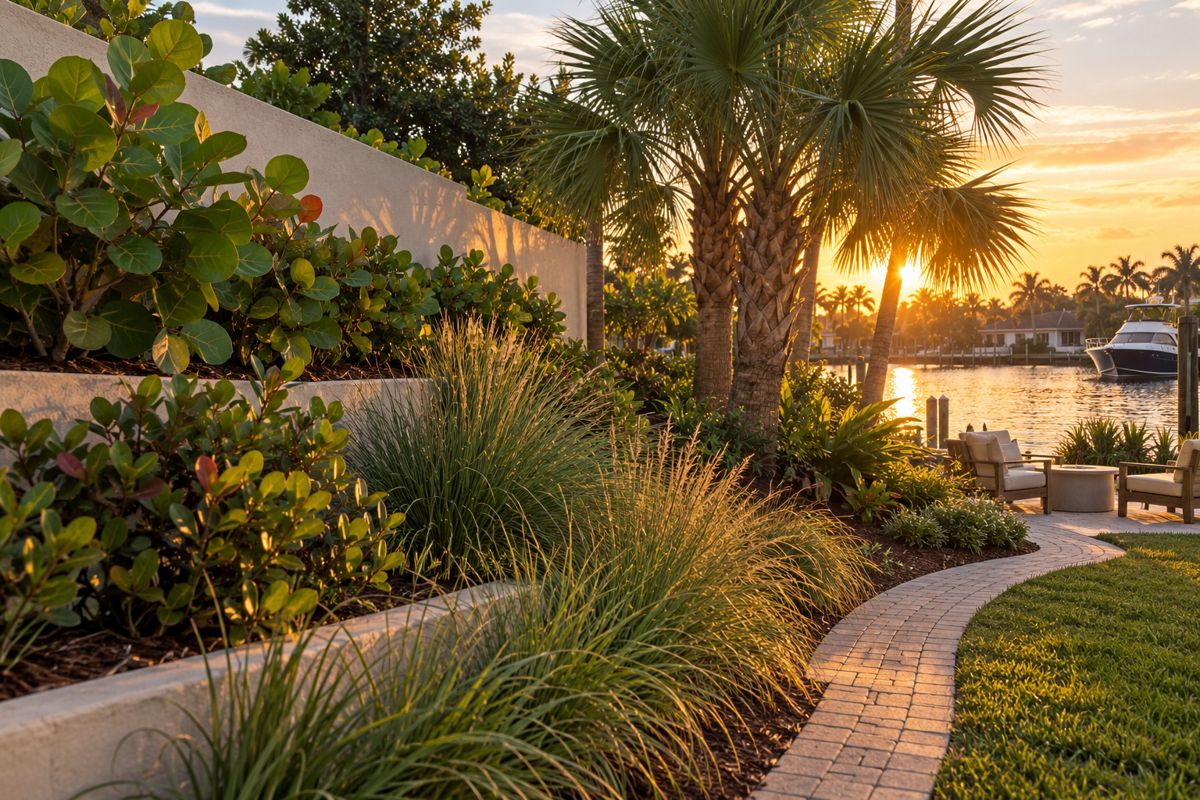
Newly planted waterfront backyard with palms, native shrubs and a curved path

Landscape design in Fort Lauderdale

Landscape design in Fort Lauderdale that suits salt, sand and storms

A plan for the whole yard, drawn around your lot, your light and your HOA rules, with plants chosen for South Florida conditions.

  • Plant lists that tolerate salt spray and heat
  • Layouts that handle heavy summer rain
  • Phased plans so big projects stay manageable

What does landscape design in Fort Lauderdale include?

Good landscape design starts with the lot, not a catalog of plants. For landscape design in Fort Lauderdale that means looking at sun and shade through the day, where water goes in a downpour, how close the water is and what the house and the neighbors look like.

A design usually covers:

  • Planting beds, hedges, palms and shade trees, with the size each will reach when mature
  • Walkways, patios and edging in materials that fit the home
  • Lawn areas, mulch and groundcover
  • Lighting and irrigation zones planned in from the start
  • Screening for privacy from the street, the neighbors or boat traffic on a canal

A complete yard overhaul takes all of this and puts it in one plan. A smaller refresh might replace only the front beds and entry. Either way the plan is written down, so the work can be done in stages if the budget calls for it.

Which plants and layouts work on a waterfront lot?

Salt is the big filter. Plants within reach of wind off the ocean or the Intracoastal need to handle salt spray, and in some yards a splash of salt water at the roots after a king tide or storm surge. Cocoplum, silver buttonwood, sea grape, sabal palm, muhly grass and firebush are among the plants often used in coastal South Florida. Gardenia and some ixora varieties tend to struggle close to the water.

Farther from the water, in parts of Victoria Park or Wilton Manors, a wider palette works. Native and Florida-friendly choices use less water and fertilizer once established, which matters with local watering rules. The University of Florida IFAS Extension office in Broward County publishes free guidance on Florida-friendly landscaping if you want to read up before we talk.

How do you design for a high water table and heavy rain?

Fort Lauderdale is flat and low. The water table is often only a few feet down, and a summer storm can drop an inch of rain or more in an hour. A design has to give that water somewhere to go.

That can mean gentle grading away from the house, planting beds that act as shallow basins, a dry creek bed, or roof drainage tied into a French drain. Where a lot is prone to standing water, raised beds or plants that tolerate wet roots, such as pigeon plum or dwarf fakahatchee grass, help.

Bigger fixes are covered on our retaining walls and drainage page. One caution: the swale between the sidewalk or road and your lot is usually public right-of-way, and cities set rules on what can be planted or changed there. Check before you alter it.

We do not quote prices without seeing the yard, but the main drivers are easy to list.

  • Size and scope. A front-entry refresh and a full yard overhaul are very different jobs.
  • What has to come out. Old sod, overgrown shrubs, stumps, broken pavers and debris all take time to remove and haul away.
  • Plant size and type. A mature palm or specimen tree costs far more than a small shrub, and installing it takes equipment.
  • Hard surfaces. Paths, patios and borders add materials and labor. See hardscaping and pavers.
  • Irrigation and lighting. New beds usually need watering that matches the plants.
  • Access. Narrow side yards and island lots where trucks cannot park close raise the labor involved.
  • Approvals. HOA review and any permits can add time.

How long does it take, and when should you call?

A site visit and quote come first. A design for a small yard can be a short process. A full overhaul can take weeks from approval to planting, depending on permits, plant availability and weather. Rainy-season storms stop work on some afternoons, and a tropical system can pause a job for days.

On the day, expect a crew to arrive with equipment, mark out beds, haul off old material and protect areas you want left alone. Tell them about irrigation heads, pool equipment, buried lines and pets.

Call when you are buying or have just bought a house, after a storm has taken out trees, when plants keep dying in the same spot, or before you build a patio or pool and want the planting planned around it. Many people plant in late fall or winter when it is cooler and drier. If a lawn is part of the plan, see sod installation, or go back to the home page for the full list of services.

Free written quotes Local crews Reliable scheduling Tidy job sites

Questions about landscaping in Fort Lauderdale

Do I need a permit to landscape my yard in Fort Lauderdale?

Usually not for planting beds, mulch or sod. Removing larger trees, trimming mangroves, building walls, bringing in fill or changing the public swale can require permits, and HOA approval is common. Rules differ by city and neighborhood, so check with the city and your association before work begins.

Can you design around my existing trees and palms?

Yes, keeping healthy mature trees is often the smart move because they give shade and take years to replace. A design should note root zones, avoid piling soil against trunks and keep new irrigation from drowning them. If a tree looks unhealthy or leaning, an arborist should assess it before you build around it.

What plants handle salt spray near the Intracoastal or a canal?

Cocoplum, silver buttonwood, sea grape, sabal palm, muhly grass and firebush are common choices in coastal South Florida. Tolerance varies with how close you are, which way the wind blows and how much the yard floods. Ask for a plant list that matches your exact exposure rather than a general one.

Will a new landscape raise my water bill?

Not necessarily. Grouping plants by water need, using drip lines for beds, and choosing Florida-friendly plants can cut watering once they are established. New plantings do need extra water for the first weeks. A lawn is usually the biggest water user in a yard, so its size affects the bill most.

Can a big design be built in phases?

Yes. A common order is drainage and grading first, then hard surfaces, then irrigation, then trees and beds, with sod last. Phasing spreads the cost, but plan the full layout up front so early work does not have to be torn out later.

Request landscape design

Tell us what you need and we call you back.

No obligation.

Step 1 of 3

What do you need?

Ready when you are. Call now or request a quote online.

How it works

  1. Tell us about the yard

    Size, goals and any photos.

  2. Site visit and quote

    We walk the property and put the price in writing.

  3. We do the work

    Scheduled crew, cleanup included.