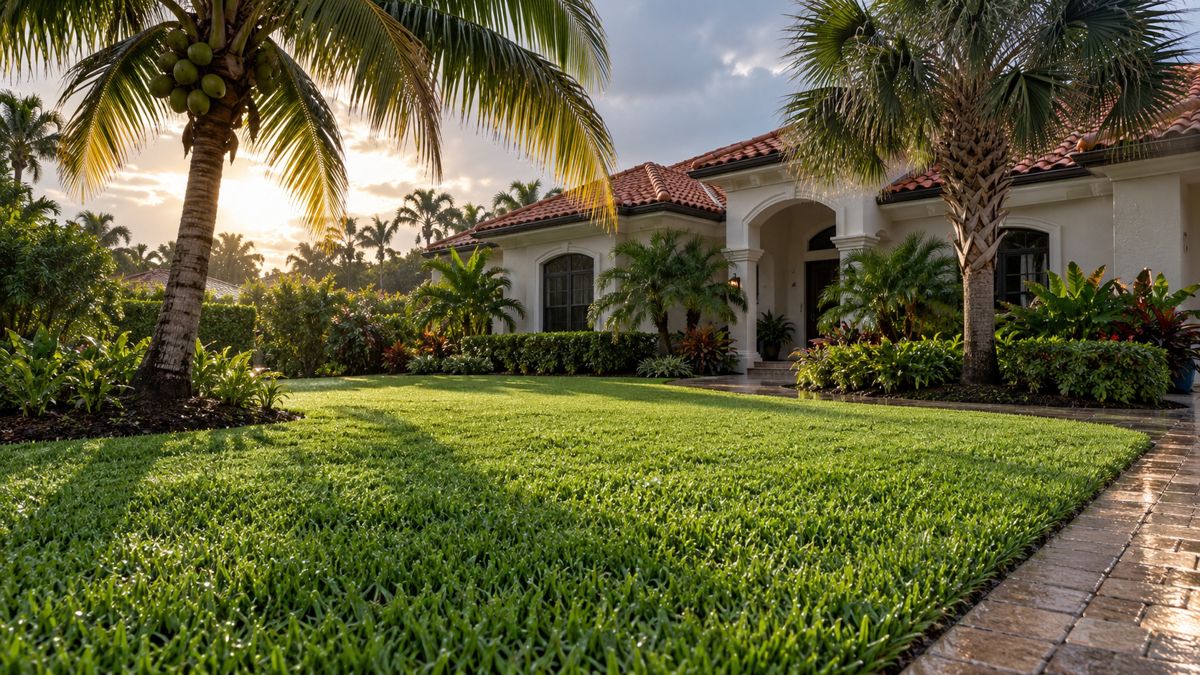
For most Fort Lauderdale lawns, St. Augustine sod is the safe choice. It handles heat, humidity and sandy soil, and it is the grass you will see on most streets. But it is not the only option. Zoysia, bahia and seashore paspalum each fit certain yards better, especially near the water or in shade. The right grass depends on sun, salt, soil and how much work you want to do.
What makes lawns different in Fort Lauderdale?
A few local conditions decide which grass lasts.
- Heat and humidity. Summers are long and wet, which suits warm-season grasses and also fungus and insects.
- Sandy, often alkaline soil. Much of Broward County sits on sand over limestone. Sand drains fast and holds few nutrients, and alkaline soil can leave some grasses yellow.
- Salt. Spray from the ocean and the Intracoastal drifts inland, and a king tide or storm surge can put salt water on a low yard.
- A high water table and heavy rain. Low spots can stay wet for days after a storm.
- Watering limits. The South Florida Water Management District and local rules restrict sprinkler days and hours, so a grass that needs constant water is a poor fit.
Cool-season grasses and centipede, which prefers acidic soil, are not usual choices here. The decision is mostly among four warm-season types.
Why is St. Augustine the default?
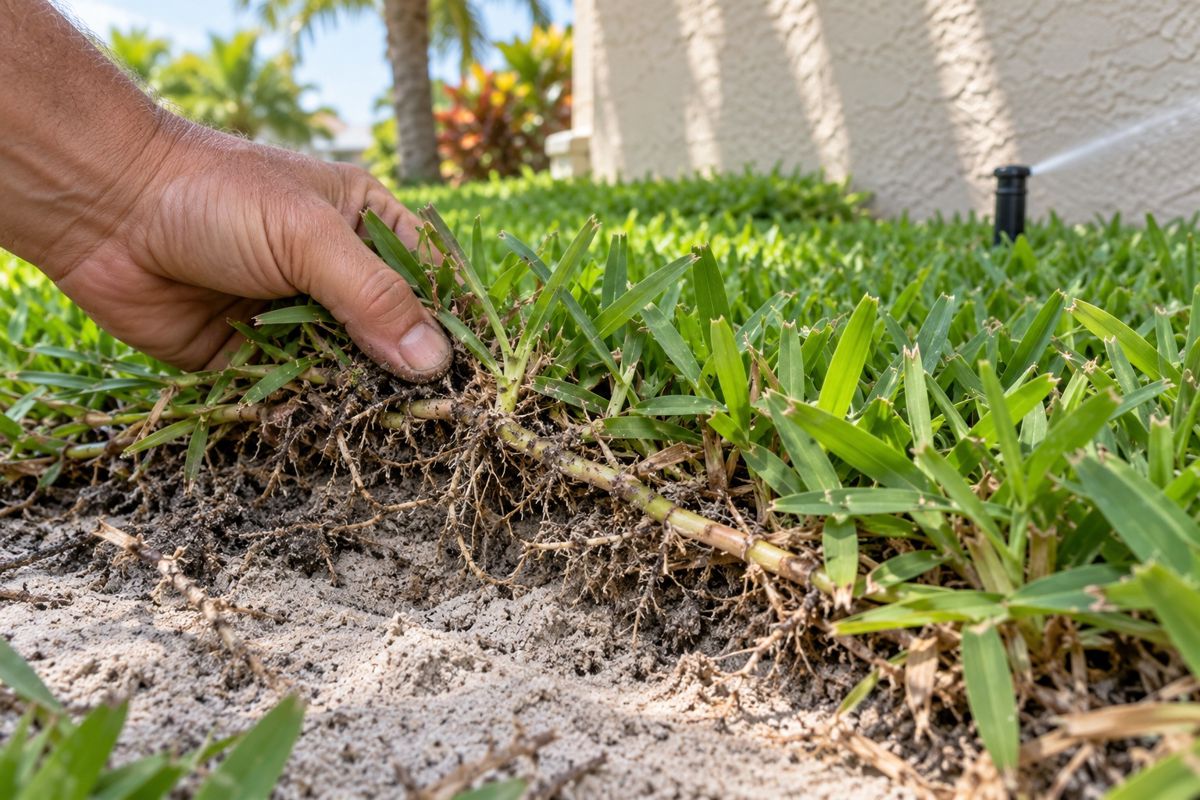
St. Augustine has wide, coarse blades that form a thick mat, and it grows well in heat. It tolerates moderate salt and handles some shade better than many grasses. It is sold as sod rather than seed, which suits quick lawn replacement.
There are several cultivars, and they behave differently:
- Floratam. A very common full-sun type that grows fast. It does poorly in shade and has lost some of its early resistance to chinch bugs.
- Palmetto and Seville. Semi-dwarf types with finer texture and better shade tolerance. They need more careful mowing.
- Raleigh. Often cited for better salt and cold tolerance, which makes it a candidate near the water.
The weak spots are pests and disease. Chinch bugs, gray leaf spot and take-all root rot are frequent in South Florida lawns. Overwatering and heavy nitrogen feeding make them worse. Mow high, around 3.5 to 4 inches, and keep your blade sharp.
When should you consider zoysia, bahia or paspalum?
Zoysia
Zoysia makes a dense, fine, carpet-like lawn that looks neat and handles some shade. It grows slowly, so it takes longer to fill in and recover from damage, and the sod usually costs more than St. Augustine. It has moderate salt tolerance and can build up thatch if it is overfed.
Bahia
Bahia is the low-input option. It tolerates poor sandy soil and dry spells and needs less feeding. It is coarse, has tall seed heads that need frequent mowing in summer, and does not like shade or salt. It suits large, plain lots more than showpiece front yards.
Seashore paspalum
Paspalum is famous for its salt tolerance and is used on coastal courses. It can work on a waterfront yard that gets spray or occasional salt flooding. The trade-off is upkeep. It wants regular mowing, more feeding and good drainage, so it is not a low-maintenance choice.
Which grass fits which kind of yard?
Use these as starting points rather than rules.
- Canal or Intracoastal lot with salt spray: look at Raleigh St. Augustine or seashore paspalum.
- Full-sun inland lawn: Floratam St. Augustine or a semi-dwarf type, with a good irrigation setup.
- Shaded yard under oaks or palms: Palmetto or Seville St. Augustine, or zoysia in lighter shade. Where shade is dense, groundcover or mulch may beat any grass.
- Big, low-input lot: bahia.
- Pool area and dogs: choose a tough, fast-recovering grass, and expect some wear and urine spots.
If the lawn failed because of poor drainage or a broken sprinkler head, a new grass will fail too. Fix the cause first. A drainage fix may involve grading or drains, covered in our guide to retaining walls and drainage.
What does sod installation involve, and what affects the cost?
The work is more than rolling out grass. The old lawn is stripped, the soil is checked and graded, any irrigation repairs are made, and the sod is laid in staggered rows, trimmed and watered in.
Price depends on several things:
- The size of the lawn
- The grass type, since zoysia and paspalum cost more than St. Augustine or bahia
- Removal and disposal of old turf
- Added soil or grading
- Access for pallets, including narrow gates and long carries
- Irrigation repairs
We do not quote from a blog post, so ask for a written quote that lists the grass cultivar, the prep work and what is excluded. Ask where the sod is grown and whether it is free of pests and weeds.
How do you keep new sod alive?
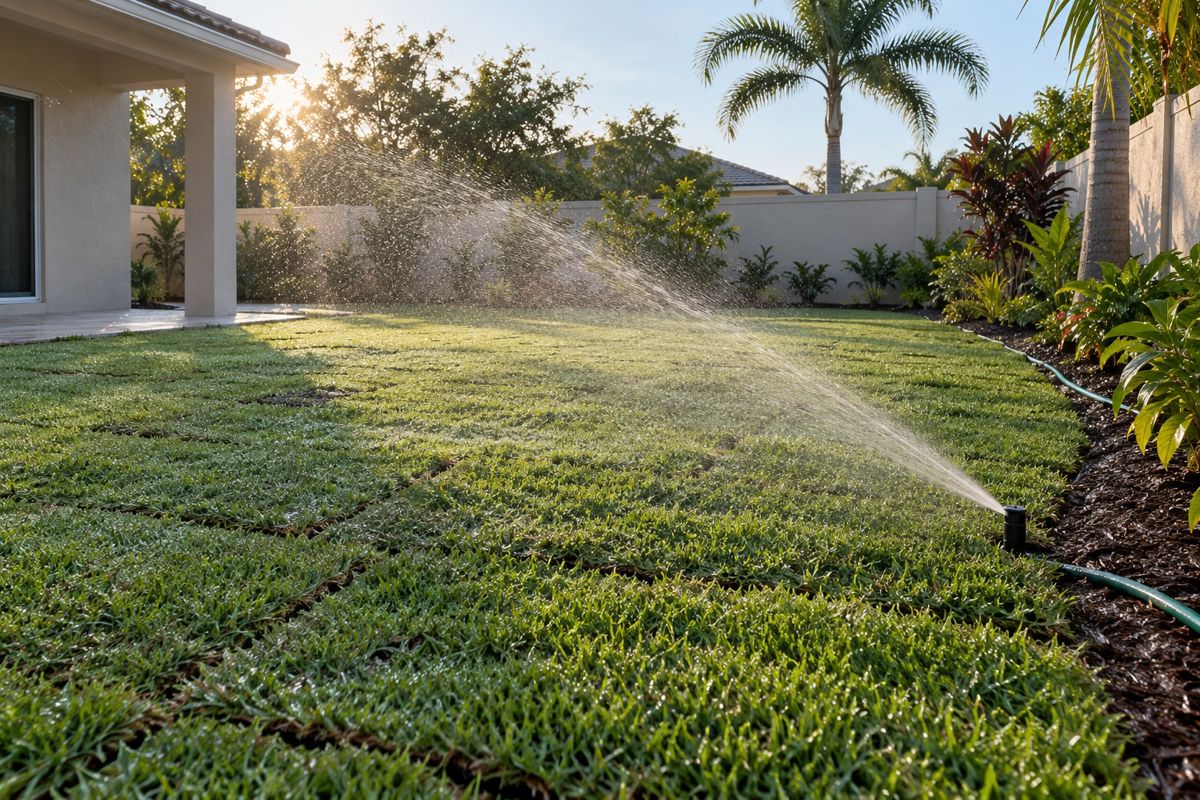
The first two to three weeks matter most. Keep the sod moist so edges do not curl and dry, and avoid walking on it. Local rules often allow extra watering while new sod establishes, but confirm current days and hours for your city. A working rain sensor is required on automatic systems in Florida, and it stops the sprinklers after rain.
After the roots grip, around two to three weeks, switch to a less frequent routine and mow before the grass gets tall. Many Broward cities and the county restrict fertilizer with nitrogen or phosphorus during the summer rainy season, so check the current dates before you feed. Fall and winter feeding with a slow-release product is usually safer. If the lawn thins or yellows, have it checked for chinch bugs or fungus before you treat it. The UF/IFAS Extension office in Broward County offers pest and disease identification.
Where should you go next?
If you are ready to replace a lawn, our sod installation page explains the steps and what to expect. If dry patches keep coming back, look at your watering setup first on the sprinkler and irrigation page. Either way, a site visit is the best way to match a grass to your yard. Start from the home page to ask for a quote.